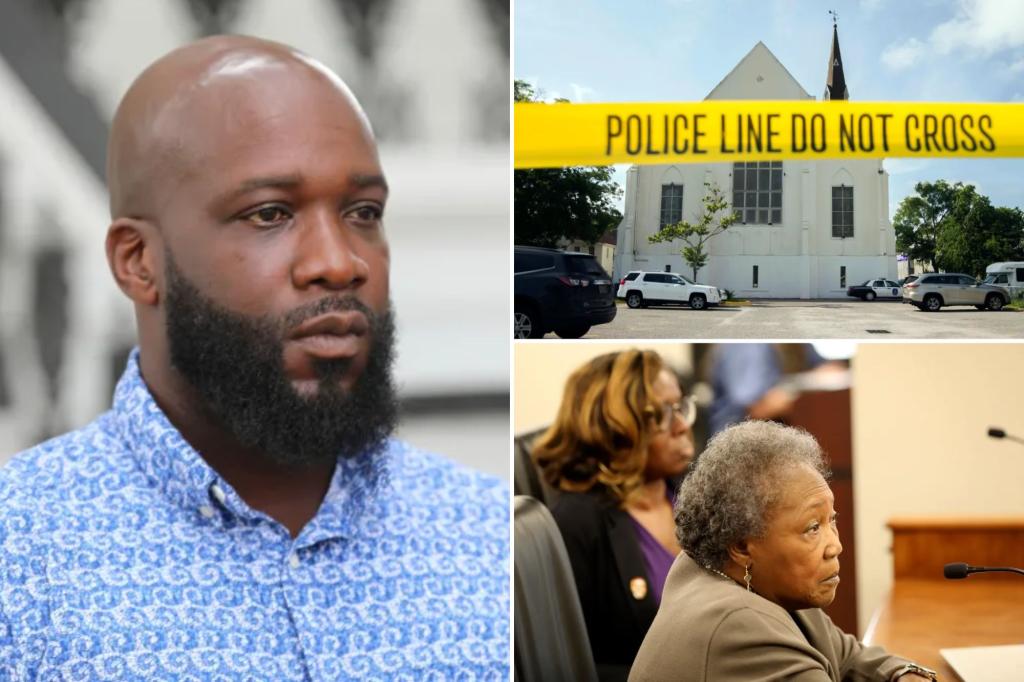

COLUMBIA, S.C. — When Jarvis McKenzie locked eyes with the person within the automobile, he couldn’t perceive the hate he noticed.
When the person picked up a rifle, fired over his head and yelled “you higher get operating, boy!” as he scrambled behind a brick wall, McKenzie knew it was as a result of he’s Black.
McKenzie instructed his story a month after the taking pictures as a result of South Carolina is certainly one of two states together with Wyoming that don’t have their very own hate crime legal guidelines.
About two dozen native governments in South Carolina have handed their very own hate crime ordinances as the most recent try and put stress on the South Carolina Senate to take a vote on a invoice proposing stiffer penalties for crimes pushed by hatred of the victims due to their race, faith, sexual orientation, gender or ethnicity.
A decade of stress from companies, the survivors of a racist Charleston church bloodbath that left 9 useless, and some of their very own Republicans hasn’t been sufficient to sway senators.
Native governments cross hate crime legal guidelines however with very mild penalties
Richland County, the place McKenzie lives, has a hate crime ordinance and the white man seen on safety digital camera footage grabbing the rifle and firing via his open automobile window earlier than driving into his neighborhood on July 24 is the primary to face the cost.
However native legal guidelines are restricted to misdemeanors with sentences capped at a month in jail. The state hate crimes proposal backed by enterprise leaders might add years on to convictions for assault and different violent crimes.
McKenzie sat in the identical spot on the fringe of his neighborhood for a 12 months at 5:30 a.m. ready for his supervisor to choose him up for work. For him and his household, each journey outdoors now’s met with uneasiness if not worry.
“It’s heartbreaking to know that I rise up each morning. I stand there not figuring out if he had seen me earlier than,” McKenzie stated.
Hate crime regulation efforts have stalled since 2015 racist Charleston church bloodbath
The shortage of a statewide hate crime regulation quickly grew to become a sore spot in South Carolina after the 2015 taking pictures deaths of 9 Black worshippers at Emanuel AME Church in Charleston. After a summer time of racial strife in 2020, enterprise leaders made it a precedence and the South Carolina Home handed its model in 2021.
However in 2021 and once more within the subsequent session in 2023, the proposal stalled within the South Carolina Senate with no vote. Supporters say Republican Senate management is aware of it can cross as extra average members of their very own get together assist it however they preserve it buried on the calendar with procedural strikes.
The opposition is finished largely in silence and the invoice will get solely talked about in passing because the Senate takes up different gadgets, like in Might 2023 when a debate on pointers for historical past curriculum on topics like slavery and segregation briefly had a longtime Democratic lawmaker ask Republican Senate Majority Chief Shane Massey why hate crimes couldn’t get a vote.
“The issue proper now’s there’s plenty of individuals who assume that not solely is it really feel good laws, however it’s unhealthy laws. It’s unhealthy coverage not as a result of folks assist hate however as a result of it furthers division,” Massey responded on the Senate flooring.
Supporters say federal hate crime legal guidelines aren’t sufficient
Opponents of a state hate crimes regulation level out there’s a federal hate crimes regulation and the Charleston church shooter is on federal dying row due to it.
However federal officers can’t prosecute circumstances involving juveniles, they’ve restricted time and sources in comparison with the state and people selections get made in Washington, D.C., as an alternative of domestically, stated Richland County Sheriff Leon Lott who pushed for the hate crime ordinance in his county.
“It’s frequent sense. We’re making one thing quite simple difficult, and it’s not difficult. When you commit against the law in opposition to anyone simply due to the hate for them, due to who they’re, the faith, etcetera, we all know what that’s,” Lott stated.
Democrats within the Senate had been particularly annoyed on this 12 months’s session as a result of whereas senators debated harsher sentences for attacking well being care staff or police canines, hate crimes once more acquired nowhere.
Supporters of a state hate-crime regulation say South Carolina’s resistance to enact one emboldens white supremacists.
“The subliminal message that claims if you happen to’re racist and also you wish to commit against the law and goal anyone for his or her race, gender, ethnicity, sexual orientation or no matter it’s you are able to do it right here,” stated McKenzie’s legal professional, Tyler Bailey.
Governor says South Carolina legal guidelines present punishment with out new hate crime invoice
Republican Gov. Henry McMaster understands why native governments are passing their very own hate crime legal guidelines, however he stated South Carolina’s legal guidelines in opposition to assaults and different violent crimes have harsh sufficient sentences that judges can provide most punishments in the event that they assume the principle motivation of against the law is hate.
“There’s no such factor as a love crime. There may be at all times a component of hatred or disrespect or one thing like that,” stated the previous prosecutor who added he fears the hazard that occurs when investigators attempt to enter somebody’s thoughts or police their speech.
However some crimes scream to offer folks extra assist in our society, Lott stated.
“I feel it’s essential that we defend all people. My race, your race, all people’s race, your faith, there must be some safety for that. That’s what our Structure provides us,” the sheriff stated.
And whereas the person charged with assault and battery of a excessive and aggravated nature for taking pictures at McKenzie faces as much as 20 years in jail if convicted, the person who was simply ready to go to work feels just like the state the place he lives doesn’t care concerning the terror he felt simply due to his race.
“I really feel like anyone is watching me. I really feel like I’m being adopted,” McKenzie stated. “It spooked me.”
